This is the first post on my new blog. My name is Anabel Palencia, I’m from Sincelejo – Colombia. At present, I study Public Accounting at the University of North. I love reading, watching movies, sharing time with family and friends, among other things.
My blog will be interesting, because I will speak about Congo’s culture and its similarities with my country, Colombia.
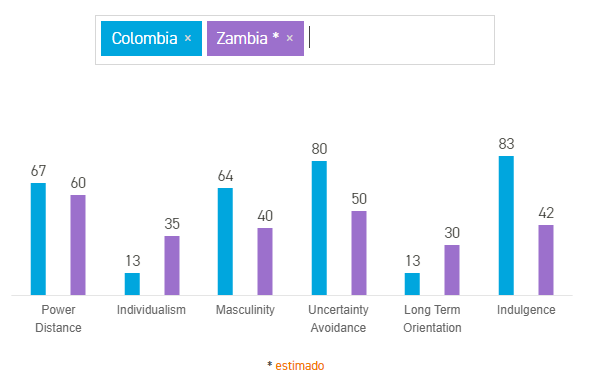
In this new publication, we will talk about the Hofstede model, which consists in analyzing the culture of a country from six different dimensions and quantifying according to its behavior what is its score.
In this case, our country is not in the countries analyzed for the model. So, I have decided to take Zambia as a reference . Zambia borders the Democratic Republic of Congo.
In the above box, we can appreciate different scores belong to Colombia and Zambia according to The Hofstede Model.
Colombia is a country that is different to Zambia in any dimension but, referent to Indulgence is more notable. To get into the subject first, let’s quote this dimension.
Indulgence stands for a society that allows relatively free gratification of basic and natural human drives related to enjoying life and having fun. Restraint stands for a society that suppresses gratification of needs and regulates it thrift strict social norms,according to Hofstede.
The Zambia culture in this dimension has a low score of 42, which categorizes it as a culture of restriction. Usually, cultures classified in this dimension as low tend to be pessimistic and inclined to alcinism. Therefore, if a Zambian decides to have the fulfillment of a desire with himself, they see it as a bad action.
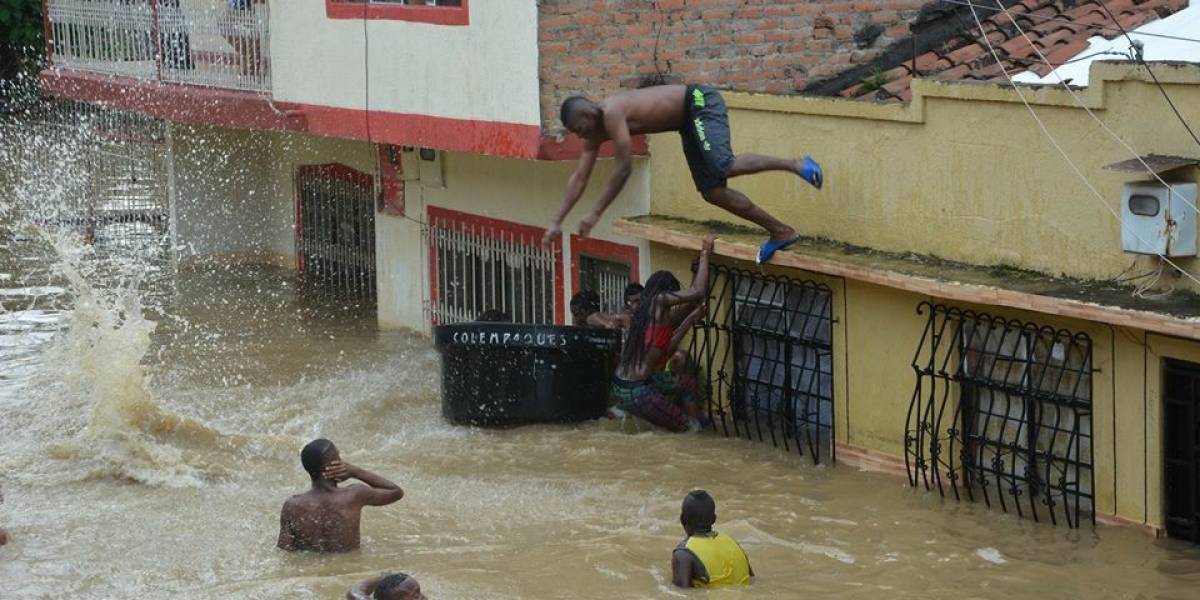
In contrast to indulgent countries such as Colombia, Colombians do not worry too much, follow their impulses, enjoy life and usually do all kinds of activities that generate satisfaction without feeling guilty of doing something wrong.
For example, the Colombian is an optimistic person with a positive attitude, in case of problems he usually seeks solutions or the way to make him less serious. To make it clearer let’s see the photo.
However, in the Power Distance dimension, there is not much difference between one country and another. Both expect and accept that power continue to be unequally distributed. As there is greater hierarchy, there is no possibility of equal treatment between people. In Colombia this happens since the conquest of the Spaniards. And it has been taken as normal in the cycle of life and they consider that the structure will not change.
» If someone thinks they are limited by their gender, race or origin, they will become even more limited.»
– Carly Fiorina
Can women hold positions that are men’s, political positions?
Do women have rights in Africa?
African men are always armed?
For years in the Republic of the Congo, women have played an unfavorable role, they have been categorized as weak. Usually in this republic, they are used in strong contests, of which they have been victims of rape, and after these atrocities they are rejected by their tribes or families, in some cases some are forced to remain silent so they do not expel them of their homes.
Also, Congolese women have gender roles as caregivers, breeders. These are the reasons why they are violated by armed groups to be able to strike the opposing troops very hard.
On the other hand, Colombian women have the traditional role of women caregivers and men as home providers. However, these gender roles have changed over the years. In Colombia, women have been empowered and educated more continuously, many are owners of large companies and well-known athletes. But if we compare the situation of Colombian women with women in Congo, it is easier to break the traditional gender scheme, as there is a greater opportunity for women to study in Colombia.
Despite being the Colombian classified as a terrorist and drug trafficker, at the sport level they are standing out in a variety of them, football, cycling, among others. In other countries they are asked in which sport they are good. While in Congo, men can be stereotyped to be fast and resilient because they are from Africa, but not always, not all are fast and resilient.
In the political sphere, Colombian women have a greater participation than Congolese women, since women in Congo do not have the facility to access even government positions. Although, in both countries it is a gender stereotype to think that politics is men’s.
«A stereotype is a fixed general image or set of characteristics that a lot of people believe represent a particular type of person or thing.» – Collins
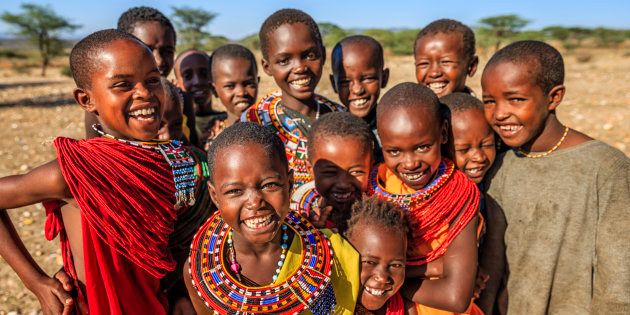
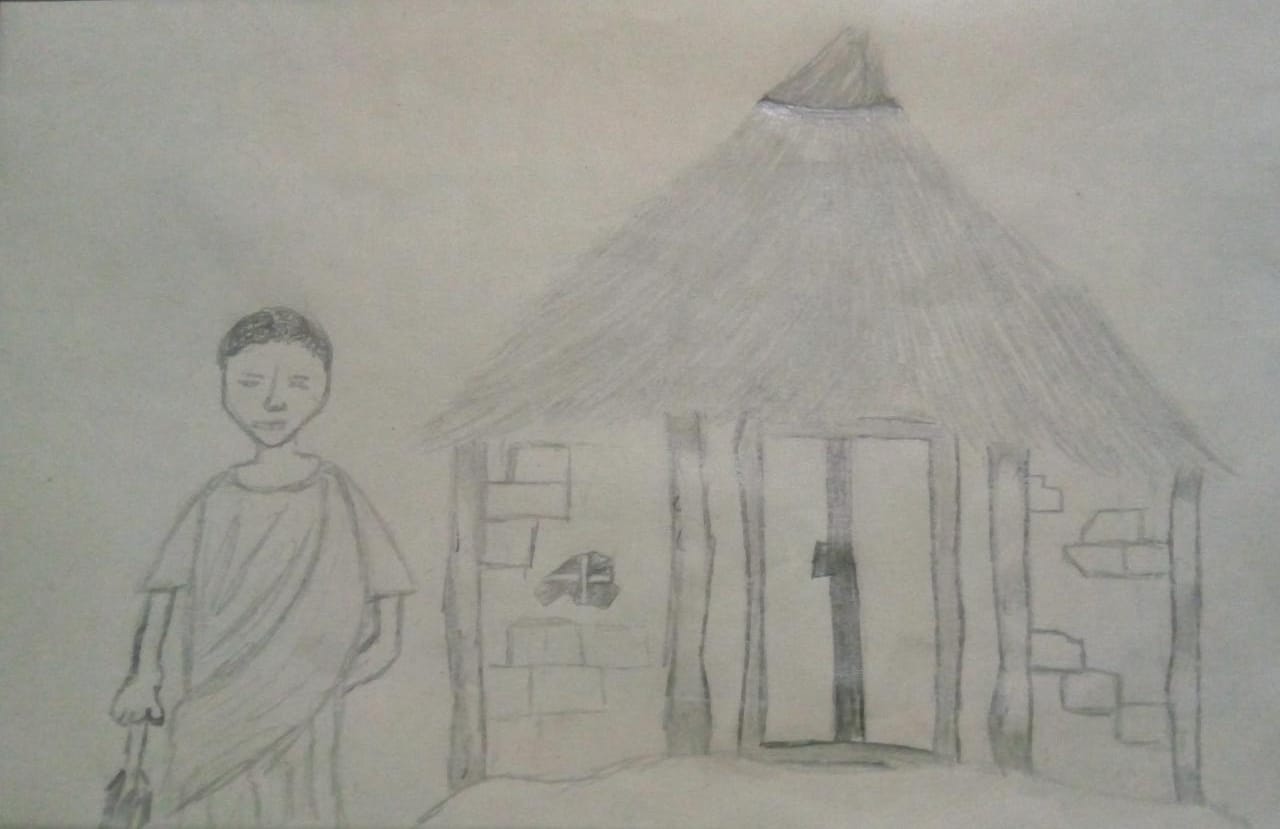
Taking into account the definition of stereotype, different stereotypes of the Congo population are represented in the drawing above, which is located in the African continent.
Usually, people form an idea of how someone can be and live in a respective place without having visited before, either through news, other people or videos, among other ways.
In this case, a very common stereotype is to think that Congolese people, because they live in Africa, live in small huts made of mud in the middle of an arid and sparsely populated place, which may or may not be true in large part. The climate of Africa is varied, proof of this, there is Kilimanjaro mountain and cities like Brazzaville.
Also, a known stereotype is, the people of Kinshasa, capital of the Democratic Republic of the Congo, have HIV. Recall that, Kinshasa was one of the first places where the virus began, however, we can not assure that all people have the virus.
In this way, there are many stereotypes unfounded by information from news, scientific studies or other sources.
 LevelVIIIGROUP07_AnabelPalenciaMontes